Formed in 2000, Arroyos & Foothills Conservancy works with urgency to identify, conserve, enhance and steward critical natural habitats and wildlife corridors of the San Rafael Hills, Verdugo Mountains, and foothills of the San Gabriel Mountains between Tujunga Wash and Altadena, and to link them to the Santa Monica Mountains at Griffith Park. Our overarching goal is to restore biodiversity throughout our Los Angeles region.
How we make an impact
AFC is at the forefront of urban conservation in Los Angeles. We make a difference for wildlife through land acquisition, stewardship, science and research, community education, and advocacy work.
Using a unique data-driven approach to land acquisition we identify parcels with high conservation value and connectivity potential.
We purchase properties from private sellers, receive land through donations, or place use restrictions on properties in order to preserve them as open space. As a land trust, once we acquire a property we preserve it in perpetuity.
We conduct original and hyper-local science and research to shape our land acquisition and environmental education programs.
Working with biologists we conduct extensive ecological surveys on acquired and target properties. Additionally, our Camera Team installs and maintains remote wildlife cameras across our long-term study areas.
Through restoration and stewardship we enhance biodiversity and maintain these critical spaces as native habitat for wildlife.
On each of our Preserves, we hold monthly restoration days where volunteers help steward the land. Together, we remove invasive plants, build and maintain trails, and plant, tend to, and water new native plants.
We provide free education and outreach to people of all ages to ensure everyone has equal access to our beautiful foothills.
We host K-12 school field trips on our preserves, organize docent-led events, and educate the community around our preserves about the natural habitat and wildlife they live amongst.
Our advocacy work gives a voice to wildlife.
We share our urban wildlife research findings with government agencies and legislators to help draft legislation that protects wildlife and natural open space. We cultivate relationships with city officials, politicians, Indigenous Tribal Leaders, and other environmental organizations to work towards a better future for wildlife.
Why Urban Land Conservation?
SUPPORTING BIODIVERSITY
The need for biodiversity in our urban area is real. The San Gabriel Mountains are a healthy and fully functioning natural landscape that support a variety of species, from apex predators like mountain lions and black bears to migrating birds and critical pollinators—but communities of natural flora and fauna suffer without sufficient access to open space.
While the San Rafael Hills, Verdugo Mountains, and Griffith Park provide critical open spaces for our wildlife, they are isolated islands of native habitat. To sustain healthy and diverse natural populations of wildlife and native plants they must be reconnected with the San Gabriels.
When wildlife are stranded in isolated islands of natural habitat they are threatened by genetic inbreeding that weakens the species and ultimately leads to local extinction. What’s more, standard land use policies and practices negatively affect the ability of ecosystems to absorb carbon. This puts further stress on habitat islands.
Wildlife corridors connect habitat islands.
WILDLIFE CORRIDORS
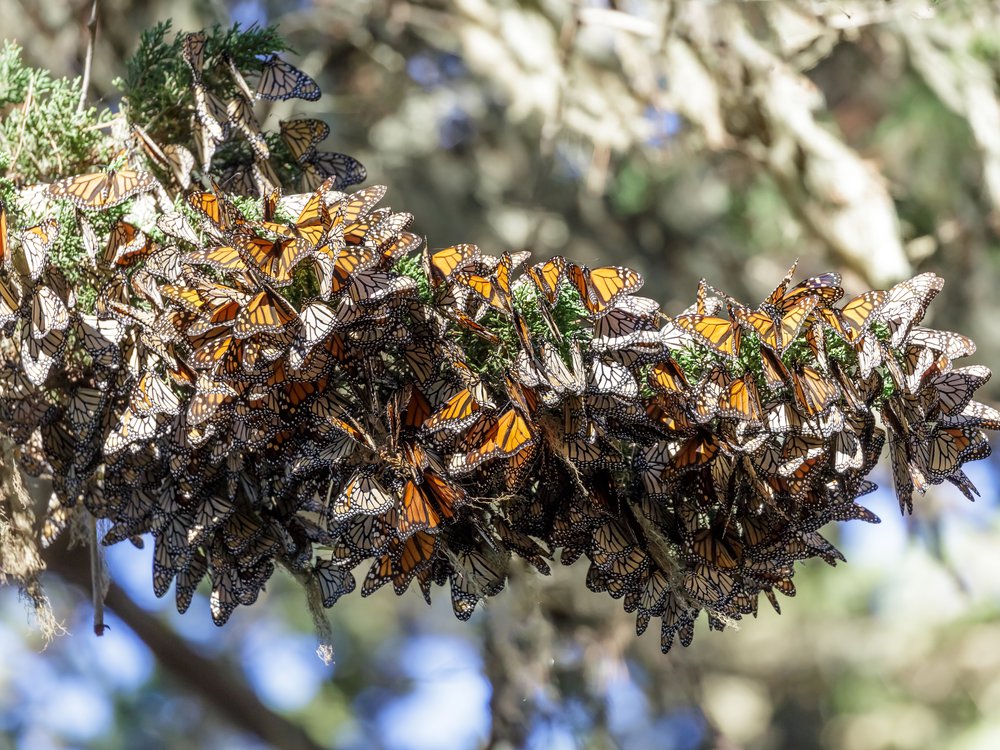
Wildlife corridors provide passageways suitable for the movement and dispersal of wildlife, including mammals, birds, butterflies, insects, and native plants.
AFC is working to connect these islands with corridors that invite wildlife to pass freely from one area to another, and allow these urban habitats to adapt to climate change.
We work to establish land corridors and sky corridors. Land corridors are connected areas of open habitat that allow terrestrial mammals (like mountain lions, bobcats, coyotes, bear, and deer) to move safely throughout our region. Restoring these habitats with native vegetation also creates sky corridors; flying wildlife including birds, butterflies, bees, and insects, rely on these areas for food, water, and shelter. These patches of habitat become stepping stones to support them in their migrations.